



















Academic assignments are among the most familiar components of a student’s educational journey. From essays and case studies to laboratory reports, technical projects, business analyses, and research presentations, students regularly produce work that demonstrates their understanding of a subject. However, most assignments have a relatively short academic life. Even when an assignment contains original observations, meaningful analysis, or an interesting research question, it rarely progresses beyond the classroom.
This creates an important opportunity for online education. What if students could learn how to transform their strongest academic assignments into professionally structured research papers that undergo editorial assessment and independent scholarly review? Instead of treating an assignment as the final outcome of a course, educational platforms could introduce an Academic Publishing Studio where students learn the complete process of research development, academic writing, evidence verification, manuscript preparation, peer review, revision, and publication ethics.
Such a system would introduce students to the practical realities of academic publishing before they enter postgraduate research programmes or professional research environments. It would also help them understand that publishing is not simply about making an assignment longer or using more complicated language. A publishable research contribution requires a clear research question, appropriate methodology, reliable evidence, transparent analysis, meaningful findings, and an honest explanation of its limitations.
For an education platform such as EasyShiksha, the Academic Publishing Studio could connect online courses, academic assignments, quizzes, digital worksheets, research projects, and internships through one continuous learning pathway. Students would not only study theoretical concepts but also learn how to communicate their findings to an academic audience.
Also Read: What If Students Could Turn Their Online Game Achievements Into Entry Requirements
Understanding the Academic Publishing Studio Concept
An Academic Publishing Studio would be a structured digital learning environment in which students develop research manuscripts from suitable academic assignments. It would not function as an automatic assignment-to-article converter. Instead, it would guide learners through a sequence of research and editorial activities that explain how an academic submission becomes a credible research contribution.
The process would begin by identifying assignments that contain sufficient potential for further investigation. A student might have completed a computer science project comparing different data-processing techniques, a business assignment analysing consumer behaviour, a chemistry report examining a particular reaction, or an education project studying digital learning practices. Although these assignments may have been prepared for assessment, some could provide a foundation for a more focused research investigation.
The studio would help students examine whether their work contains an identifiable research problem, whether the evidence is sufficient, whether the methodology is appropriate, and whether the findings offer something useful beyond the original classroom requirement. If the work is primarily descriptive or repeats established information, the student may need to conduct additional research rather than simply rewrite the existing material.
This distinction is essential because academic publishing is not a reward for completing coursework. A research paper must satisfy standards of originality, relevance, evidence, and academic integrity. The studio would therefore teach students to evaluate their own work critically before attempting publication.
The system could also distinguish between different publication outcomes. Some student work may be suitable for a university research showcase, an undergraduate research journal, a conference poster, a student research repository, or a professionally reviewed academic journal. These destinations have different requirements and levels of review. Helping students understand those differences would be an important part of the learning experience.
Why Academic Assignments Have Untapped Research Potential
Students frequently complete assignments that involve more investigation than their final grades reveal. A well-developed assignment may include a carefully selected dataset, a comparison of competing approaches, an experiment, an original survey, a technical prototype, or a detailed analysis of an industry problem. These elements can become valuable starting points for research when they are examined more deeply.
For example, a student studying web development might create an assignment comparing website performance under different image optimisation techniques. The original submission may contain a few screenshots and a short explanation of the results. Through the Academic Publishing Studio, the student could learn to develop a more systematic investigation by defining performance indicators, controlling testing conditions, comparing optimisation methods, documenting the technical environment, and analysing the results.
Similarly, a business management student might prepare a case study on customer satisfaction. The studio could help the learner identify a narrower research question, examine relevant literature, improve the research instrument, document the sample, and distinguish between observed patterns and unsupported conclusions. The assignment would then become the starting point for a more rigorous investigation.
However, not every assignment should be converted into a publication. Some coursework is designed to test basic knowledge rather than generate new findings. Other assignments rely heavily on secondary information, have insufficient evidence, or use research methods that cannot support the conclusions being presented. The studio should teach students to recognise these limitations rather than encouraging publication for its own sake.
This approach would also change how students perceive academic work. Instead of viewing every assignment as a temporary requirement, they could begin to consider whether their research question, observations, or project results might support further investigation. Such thinking encourages curiosity, critical evaluation, and stronger academic planning.
Building a Research-Readiness Assessment System
The first major component of the Academic Publishing Studio could be a research-readiness assessment. Before beginning manuscript development, students would submit an assignment or project for structured evaluation. The purpose would not be to decide automatically whether the work deserves publication. It would identify its strengths, weaknesses, and possible research direction.
The assessment could examine the clarity of the research question, the relevance of the topic, the quality of the evidence, the suitability of the methodology, the accuracy of citations, and the relationship between the findings and the conclusions. It could also identify whether the assignment contains original work or primarily summarises existing material.
A student who submits a technical project, for example, might receive feedback indicating that the project demonstrates practical implementation but lacks a controlled comparison. Another student might have a strong literature review but no clearly defined research gap. A third student may have collected useful data but needs to improve the statistical analysis.
The studio could translate these observations into a development plan. Rather than simply receiving a general message that an assignment needs improvement, students would understand which research skills they need to strengthen. They might be directed towards an online course on research methodology, a quiz on sampling techniques, a worksheet on data interpretation, or a practical exercise involving academic referencing.
Research readiness should be treated as a developmental process rather than a fixed score. A student’s initial work may not be suitable for publication, but the student should have a clear route for improving it. This would make the studio an educational environment rather than a competitive publication-ranking system.
Teaching Students to Identify a Genuine Research Gap
One of the most difficult stages of academic writing is identifying what has not already been adequately investigated. Students often choose topics because they are interesting, relevant, or widely discussed. However, an interesting topic does not automatically represent a research gap.
The Academic Publishing Studio could introduce dedicated learning modules on literature exploration and research-gap identification. Students would learn how to examine existing studies, compare their findings, identify differences in research methods, and recognise questions that remain unanswered.
For instance, a student researching artificial intelligence in education might initially select a broad topic such as the benefits of AI-based learning. Through guided research, the student could discover that the topic is too general to support a focused paper. The student might then investigate how different feedback approaches influence the ability of learners to identify errors in programming exercises. This narrower question would create a more manageable research direction.
The platform could provide structured literature-review worksheets where students record the purpose, methodology, sample, findings, and limitations of relevant studies. Comparing these records would help learners identify recurring patterns and areas requiring further investigation.
Artificial intelligence could support the process by suggesting related research themes, identifying potentially overlapping topics, and helping students organise their literature notes. However, AI-generated suggestions should not be treated as verified research gaps. Students must inspect the original academic sources and determine whether a proposed gap is genuine.
This stage would teach an important distinction between discovering a topic and establishing a research contribution. It would also help learners understand why a strong research paper must engage with existing knowledge rather than presenting familiar information as a new discovery.
Transforming an Assignment Into a Structured Research Manuscript
Once a suitable research direction has been identified, students could begin converting their assignment into a manuscript. This would require a different approach to organisation, argument development, and evidence presentation.
A conventional assignment may be organised around the questions provided by an instructor. A research paper, by contrast, must develop a coherent argument around a clearly defined research objective. The studio would teach students how to reorganise their existing material so that every section contributes to the central investigation.
Students would learn how to prepare an informative title, write an abstract, develop an introduction, establish the research context, explain the methodology, present the results, interpret the findings, discuss limitations, and prepare a conclusion. They would also learn that these sections are not independent blocks of text. Each must connect logically with the research question and the evidence collected.
The abstract, for example, should communicate the purpose of the study, its general approach, the most important findings, and the main conclusion. It should not simply introduce the topic or promise what the paper intends to investigate. Similarly, the conclusion should reflect the actual findings rather than introduce unsupported claims.
The studio could provide subject-specific manuscript templates while explaining that publication formats vary across journals and conferences. A computer science paper may require technical implementation details and experimental comparisons, whereas a social science paper may place greater emphasis on research participants, sampling, and data collection. A scientific study may require detailed information about experimental conditions and reproducibility.
Through this process, students would learn to adapt their writing to the expectations of different academic disciplines rather than applying one generic format to every research topic.
Developing Strong Research Methodology Skills
A research paper cannot become reliable simply because it is written in a professional style. The quality of the methodology determines whether the investigation can support its conclusions. For this reason, the Academic Publishing Studio should place substantial emphasis on research design.
Students would learn how to distinguish between qualitative, quantitative, and mixed-methods research. They would examine how researchers select participants, define variables, develop surveys, conduct interviews, design experiments, collect observations, and analyse results. The appropriate method would depend on the research question rather than on the student’s preference for a particular technique.
A student investigating website usability might need a structured user-testing process. A student comparing machine-learning models might require consistent datasets, defined evaluation metrics, and controlled experimental conditions.
The platform could use interactive worksheets to help learners identify methodological weaknesses. For example, a worksheet might present a research scenario in which the sample is too small, the questions are leading, or the experimental conditions are inconsistent. Students would be asked to identify the problem and propose a more appropriate design.
This would make research methodology a practical skill rather than a theoretical chapter that students memorise for examinations. Learners would also understand that the method must be explained transparently so that readers can evaluate how the findings were produced.
The studio should make it clear that students must not invent data, manipulate observations, or change research methods after the fact to produce more attractive results. If an investigation has limitations, those limitations must be reported honestly.
Academic Writing, Citation, and Reference Management
Academic publishing requires a writing style that is clear, precise, and supported by credible sources. Students may understand their subject well but struggle to communicate their findings in a way that meets scholarly expectations. They may use informal language, make broad claims, rely on weak references, or fail to distinguish their own analysis from information taken from other publications.
The Academic Publishing Studio could introduce writing modules that focus on evidence-based arguments, paragraph development, technical terminology, transitions, and academic tone. Students would learn how to explain complex ideas without making sentences unnecessarily complicated. They would also practise connecting claims with relevant evidence and explaining why that evidence supports their interpretation.
Citation and referencing should form another central part of the programme. Learners would study commonly used referencing systems, including APA, MLA, IEEE, and other styles relevant to different disciplines. They would understand the difference between a direct quotation, a paraphrase, a summary, and their own interpretation.
Reference-management exercises could help students organise academic sources, record publication details, connect citations with manuscript sections, and check whether every in-text citation has a corresponding reference entry. Students should also learn to evaluate the reliability of sources, distinguishing peer-reviewed research and authoritative publications from unsupported websites or misleading online material.
The platform could provide practical exercises in which learners identify missing citations, incorrect reference details, unsupported statements, and accidental plagiarism. These activities would help students understand that referencing is not merely a formatting requirement. It is a method of acknowledging previous research and allowing readers to trace the evidence behind an argument.
Introducing Professional Editorial Review
An important feature of the Academic Publishing Studio would be its editorial review environment. Students should experience how academic manuscripts are examined before they are accepted by a publication. This would help them understand that research writing is a process of evaluation and improvement rather than a one-time submission.
The studio could introduce an editorial screening stage in which a trained reviewer or qualified academic mentor checks whether the manuscript fits the selected publication’s scope, follows its submission requirements, and contains the basic information needed for review. Manuscripts that are incomplete, poorly structured, or outside the publication’s subject area could be returned for correction.
After editorial screening, suitable manuscripts could enter a structured review process. Reviewers might assess the clarity of the research question, relevance of the literature review, appropriateness of the methodology, quality of the analysis, originality of the contribution, and consistency of the conclusions with the available evidence.
Students would receive comments that explain what needs improvement and why. A reviewer might question whether the research sample supports the conclusion, request additional methodological information, identify an unsupported claim, or suggest a clearer explanation of the results.
The studio should distinguish between educational review and formal journal peer review. Feedback from a course instructor or platform mentor does not automatically constitute independent peer review by an academic journal. If a manuscript is submitted to an external publication, that publication controls its own editorial and peer-review process.
This distinction would help students develop realistic expectations and avoid misunderstanding the meaning of professional review.
Simulating the Peer-Review Process Through Learning Activities
Before students submit manuscripts for external consideration, they could participate in simulated peer-review exercises. These activities would introduce them to the responsibilities of reviewers and the importance of evaluating research objectively.
In a simulated review, students could examine anonymised manuscripts or carefully prepared research examples. They would be asked to identify strengths, weaknesses, missing information, and questions that require clarification. The exercise would teach them to provide constructive feedback rather than simply stating whether they like or dislike a paper.
For example, a student reviewing a paper about online learning outcomes might discover that the authors have reported improved performance but have not explained how the improvement was measured. The reviewer would need to identify the missing information and explain why it matters to the credibility of the findings.
The platform could also introduce different types of reviewer recommendations, such as acceptance, minor revision, major revision, or rejection. Students would learn that these outcomes reflect the reviewer’s assessment of the manuscript and that revisions are a normal part of scholarly communication.
A particularly valuable activity would involve reciprocal peer review. Students could exchange manuscripts within a supervised learning group and review each other’s work using a common evaluation framework. The author would then prepare a response explaining which recommendations were accepted, which were not adopted, and why.
Such exercises would develop critical reading, professional communication, academic judgement, and the ability to respond constructively to criticism. These skills are valuable not only in research publishing but also in professional environments where reports, proposals, technical documents, and project outcomes are reviewed by others.
Learning to Respond to Reviewer Comments
Receiving reviewer comments can be challenging, especially for students who are unfamiliar with academic criticism. They may interpret a request for substantial revision as a rejection of their ability rather than as part of the process of improving research quality.
The Academic Publishing Studio could introduce a dedicated revision-management module. Students would learn how to read reviewer comments carefully, identify the underlying concern, decide what changes are necessary, and prepare a professional response.
A response-to-reviewers document could be developed as part of the learning activity. Each comment would be considered individually, followed by an explanation of the action taken. If the manuscript has been revised, the student would identify the relevant change. If a suggestion cannot reasonably be implemented, the student would provide a clear academic justification rather than ignoring the comment.
For example, a reviewer may request a larger sample size. The student might need to explain whether additional data can be collected, whether the research design permits expansion, or whether the study must be presented as exploratory with a clearly acknowledged limitation. The student should never alter or invent data simply to satisfy a reviewer.
Revision history could also be maintained within the platform. Students would be able to compare earlier and revised manuscript versions, inspect changes, and understand how reviewer feedback improved the final paper.
This process would teach resilience and professional accountability. It would also show students that a strong researcher must be willing to reconsider assumptions and improve an argument when reliable evidence identifies a weakness.
Connecting Online Courses With the Publishing Journey
The Academic Publishing Studio could become more effective when connected with the wider online learning ecosystem. Research publication involves several different capabilities, and students may not possess all of them when they begin.
EasyShiksha could create course pathways that address these requirements at different stages. A student who needs to improve academic writing could access a course on research communication. Another learner might require additional training in statistics, data visualisation, programming, literature reviews, or experimental design.
For example, a student preparing a paper on artificial intelligence could be directed towards relevant courses in machine learning, data analysis, research ethics, and scientific writing. A student working on a business study might need additional learning in market research, financial analysis, survey design, and business communication.
Quizzes could assess whether students understand important concepts such as research variables, sampling methods, statistical interpretation, plagiarism, and citation rules. Digital worksheets could provide practical exercises in which learners develop research questions, evaluate sources, analyse datasets, and improve manuscript sections.
This connected approach would make the publishing journey an extension of learning rather than a separate activity available only to students who already possess advanced research skills.
It would also create a more meaningful relationship between course completion and practical outcomes. Instead of measuring progress only through completed lessons or quiz scores, students could demonstrate how they applied their knowledge to develop a research manuscript.
The Role of Educational Games in Research Training
Educational games could introduce research publishing through realistic decision-making environments. Students could participate in a virtual academic publishing process in which they act as authors, editors, reviewers, and research coordinators.
A simulated publishing challenge might begin with a collection of student assignments. Learners would need to identify which submissions have research potential, select an appropriate academic direction, and determine what additional evidence is required. They could then move through manuscript preparation, editorial screening, reviewer feedback, and revision.
Different scenarios could introduce practical challenges. A manuscript might contain an unclear research question, an incomplete reference list, inconsistent results, or a conclusion that goes beyond the available evidence. Students would need to identify and resolve these problems before progressing.
Another simulation could place learners in the role of an editor who must evaluate several submissions with limited review capacity. They would need to consider relevance, completeness, research quality, and reviewer expertise while avoiding unfair decisions based on personal preferences.
These activities could make the publishing process easier to understand because students would experience the consequences of academic decisions. They would learn that a manuscript can be rejected for reasons unrelated to writing quality and that editorial decisions require transparent standards.
However, game-based publishing simulations should remain educational exercises. Completing a virtual publishing challenge must not be presented as equivalent to receiving acceptance from a real academic journal.
Artificial Intelligence as a Research and Editorial Assistant
Artificial intelligence could support several stages of the Academic Publishing Studio, particularly where students need help organising information, identifying weaknesses, and improving the clarity of their writing.
AI-based tools could help students generate alternative research questions, organise literature notes, identify repeated arguments, check manuscript structure, and suggest improvements to paragraph clarity. They could also help learners understand complex reviewer comments by explaining unfamiliar terminology and identifying the section of a manuscript to which a comment relates.
For example, a student might submit a draft introduction and receive suggestions about whether the research problem is clearly established, whether the purpose of the study is identifiable, and whether the introduction connects logically with the literature review. The student could then examine the suggestions and decide which revisions are academically justified.
AI could also support technical checks, such as identifying inconsistent terminology, missing section headings, incomplete reference information, or differences between the abstract and the main findings. These checks would be particularly useful for beginners who are still developing academic writing skills.
However, AI must not become a substitute for research or scholarly judgement. It can generate inaccurate references, misunderstand technical findings, invent information, or suggest unsupported interpretations. Students must verify all sources and facts against original material.
The studio should also teach learners to disclose AI assistance where required by the relevant institution or publication. Students should understand the difference between using AI for language support and presenting AI-generated analysis or content as original research. Human authors remain responsible for the accuracy, originality, and integrity of their submissions.
Research Ethics, Originality, and Publication Responsibility
An Academic Publishing Studio would need to make research ethics a core part of the learning experience. Students should understand that producing a publication involves responsibilities towards research participants, original authors, institutions, reviewers, and readers.
The programme could introduce lessons on plagiarism, duplicate publication, data fabrication, data falsification, inappropriate authorship, conflicts of interest, and misleading research claims. These issues should be explained through practical scenarios rather than only through definitions.
For instance, students could examine a case in which a learner copies sections from an online article without proper attribution. Another scenario might involve a student submitting the same manuscript to multiple journals simultaneously despite a publication’s policy prohibiting simultaneous submission. A third could involve adding a person as an author even though that individual made no qualifying contribution to the research.
The studio should also explain that permission and ethical approval may be necessary when assignments involve human participants, personal information, sensitive data, or identifiable records. Students should not assume that collecting information for a classroom exercise automatically gives them permission to publish it.
Where a project uses copyrighted images, datasets, software, or previously published material, learners must understand the relevant permissions and licensing requirements. These lessons would establish an important principle: academic publication is not simply about making research visible. It is about making knowledge available responsibly and honestly.
Building Partnerships With Universities, Researchers, and Academic Publishers
For the Academic Publishing Studio to provide meaningful professional exposure, an education platform could develop partnerships with universities, research centres, academic mentors, conference organisers, and legitimate scholarly publishers.
Universities could contribute research-methodology experts who help design learning activities and review student manuscripts. Academic mentors could provide subject-specific guidance, while conference organisers might offer appropriate opportunities for student presentations or research showcases.
Selected academic publications could participate by explaining their submission requirements, editorial processes, and expectations for student authors. This would help learners understand how publication standards differ across disciplines and institutions.
Such partnerships should be carefully structured. The platform should not promise that completing a course will guarantee publication or that every manuscript submitted through the studio will be accepted by a partner journal. Editorial independence must be maintained, and publication decisions should remain with the relevant scholarly organisation.
The platform could also introduce a mentor-guided research pathway. Students with promising projects could receive support in refining their research questions, strengthening methodology, and preparing submissions. Those whose work is not yet ready could continue developing their skills through additional courses and practical assignments.
A well-designed partnership network would make the studio more than a manuscript editor. It could become a bridge between online learning and the broader academic research community.
Integrating Research Publishing With Internships and Career Development
The skills developed through academic publishing are relevant to many professional careers. Research writing, evidence evaluation, data interpretation, technical documentation, and responding to critical feedback are important in education, software development, healthcare research, business analysis, engineering, public policy, and other fields.
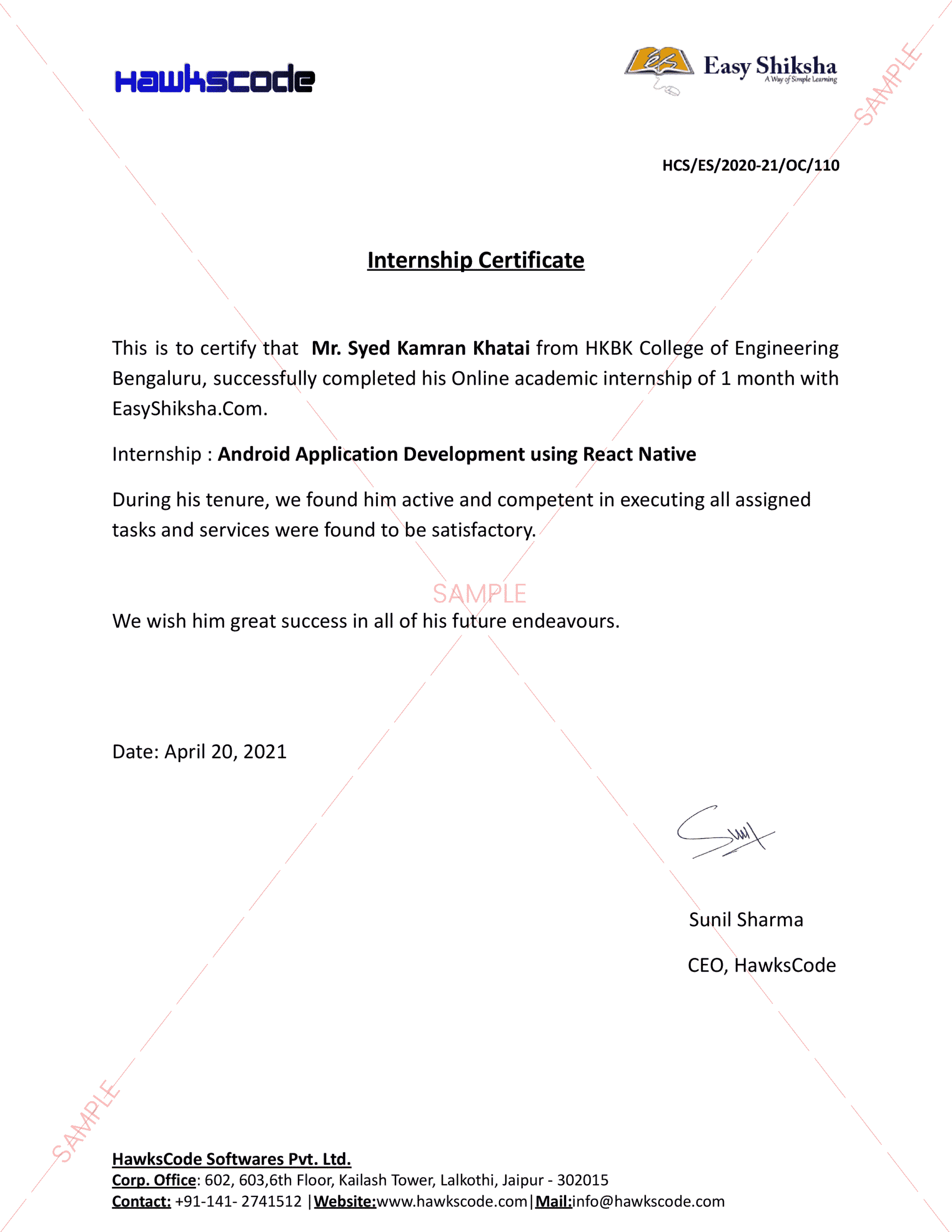
EasyShiksha could connect the Academic Publishing Studio with relevant internship opportunities. Students interested in research might explore internships involving literature reviews, data collection, technical documentation, laboratory support, research communication, or project analysis. These opportunities could provide supervised exposure to the professional responsibilities associated with research work.
A student who has developed a research paper on website accessibility, for example, might be interested in a project involving usability evaluation or digital accessibility testing. A student who has completed a business research project could explore market research or business analytics opportunities. A learner who has investigated educational technology might pursue an internship involving learning analytics or instructional design.
The platform could help students connect these experiences with their developing research portfolios. However, an internship should not be treated as a guaranteed route to publication. Any research contribution must be accurately documented, and authorship must reflect genuine scholarly contributions under the applicable publication standards.
This connection would allow students to understand how academic research skills transfer into professional environments. It would also make their learning outcomes more concrete by connecting courses and assignments with supervised practical experience.
Creating a Student Research Portfolio
The Academic Publishing Studio could maintain a digital research portfolio that records a student’s progress from the original assignment to the final manuscript or research presentation.
The portfolio might include the initial research question, literature-review notes, methodology documents, datasets where sharing is permitted, analysis records, manuscript versions, reviewer feedback, revision responses, and final outcomes. It could also record the student’s role in collaborative projects and the contributions made by supervisors or co-authors.
Such a record would help students demonstrate more than a final certificate. It would show how they approached a research problem, developed evidence, responded to criticism, and improved their work.
The portfolio should distinguish carefully between different stages of academic progress. These distinctions are important for academic credibility and professional transparency.
Students could choose which portfolio materials to share publicly, subject to confidentiality, copyright, institutional policies, and research-participant permissions. Sensitive datasets and unpublished research should not automatically become publicly accessible.
Over time, the portfolio could help students identify their research interests and prepare for postgraduate applications, research assistant positions, academic projects, or industry roles that require strong analytical and communication skills.
Ensuring Fair Access and Avoiding Publication Pressure
The studio should provide opportunities for learners with different levels of experience. Beginners might start with research summaries, literature-review exercises, or poster presentations, while advanced students could work towards more substantial manuscripts. The quality and suitability of the work should determine the next step, not a student’s financial capacity or willingness to pay for publication-related services.
The platform should also protect students from predatory journals and misleading publication offers. Learners need to understand warning signs such as unrealistic acceptance guarantees, unclear editorial boards, misleading indexing claims, poor transparency about fees, and pressure to publish quickly without meaningful review.
Publication fees, where applicable, should be explained transparently. Students should never be encouraged to pay for acceptance or to believe that a fee guarantees scholarly quality. Legitimate publication decisions depend on editorial assessment and the standards of the relevant publication.
Fair access would also require accessible learning materials, clear review criteria, transparent feedback, and support for students from different academic backgrounds. A student should be able to improve their research skills even if their first assignment is not suitable for publication.
The main objective should remain educational development. Publications may be a valuable outcome, but learning how to investigate questions and communicate evidence is itself a meaningful achievement.
Measuring the Success of an Academic Publishing Studio
The success of the Academic Publishing Studio should not be measured only by the number of manuscripts accepted by journals. Such a metric could encourage students and mentors to prioritise publication quantity over research quality.
A more useful evaluation system would examine how effectively students improve their research capabilities. The platform could assess whether learners develop clearer research questions, use more reliable sources, select appropriate methodologies, present evidence accurately, and respond effectively to reviewer feedback.
It could also examine the quality of student portfolios, the completion of research-development stages, participation in supervised review exercises, and the ability to explain the limitations of a study. These indicators would provide a more balanced understanding of educational outcomes. Feedback from academic mentors, students, university partners, and publishing professionals could help identify weaknesses in the programme. If students consistently struggle with statistical analysis, the platform could strengthen its data-research courses.
The platform could also compare students’ initial and revised manuscripts to identify improvements in structure, clarity, methodology, and evidence presentation. This would demonstrate whether the studio is genuinely helping learners develop stronger academic work.
The long-term objective should be to build a learning environment in which students become more capable of conducting and communicating research, whether or not their individual projects ultimately become formal publications.
How EasyShiksha Could Develop the Academic Publishing Studio
EasyShiksha could introduce the Academic Publishing Studio as a connected learning pathway within its existing education ecosystem. The system could begin with a research-readiness assessment that helps students identify assignments and projects with potential for further investigation.
Students could then follow recommended online courses covering research methodology, academic writing, data analysis, referencing, literature reviews, and publication ethics. Quizzes would reinforce important concepts, while digital worksheets would provide practical activities involving research questions, source evaluation, methodology design, and manuscript improvement.
The next stage could involve manuscript development through structured templates and guided editorial checks. Students would prepare their research documents, receive feedback from qualified mentors where available, and participate in supervised peer-review simulations. Suitable manuscripts could then be considered for external submission through appropriate academic channels.
Educational games could provide additional practice by simulating editorial decisions, reviewer responsibilities, and research-integrity challenges. Internships could introduce learners to relevant professional activities, while the digital research portfolio would document their progress and achievements.
This integrated model would create a relationship between different parts of the platform. A course would provide the knowledge needed to conduct research, a quiz would check understanding, a worksheet would develop practical skills, a game would simulate academic decisions, and an internship could provide supervised professional exposure.
The publishing studio would bring these activities together around a meaningful outcome: helping students develop the ability to produce and communicate credible research.
The Future of Assignment-Based Academic Publishing
The Academic Publishing Studio represents a possible shift in how online education approaches student assignments. Instead of treating coursework as a temporary assessment, educational platforms could help learners identify projects that deserve further investigation and guide them through the process of developing more rigorous research.
This model would not make every assignment publishable, nor would it remove the need for academic supervision, independent peer review, and ethical research practices. Its value would come from teaching students what professional research requires and giving them a structured environment in which to develop those capabilities.
For students, the experience could provide early exposure to academic communication, research evaluation, and the realities of scholarly review. For universities and mentors, it could create additional opportunities to identify motivated learners and support promising student research. Then For employers, it could help graduates demonstrate analytical thinking, technical documentation, and the ability to work with evidence. For EasyShiksha, the concept could strengthen the connection between online courses, practical assignments, quizzes, games, internships, and career development.
Ultimately, the most valuable outcome of an Academic Publishing Studio would not be the promise that every student can become a published researcher. It would be the opportunity for every interested learner to understand how credible research is created, how professional feedback improves it, and how academic knowledge can be shared responsibly with a wider community.
Get Some Courses: SQL Coding Challenge: Top 20 from Basic to Advance , The Evolution, Impact, and Future of the Internet in the Modern World