


























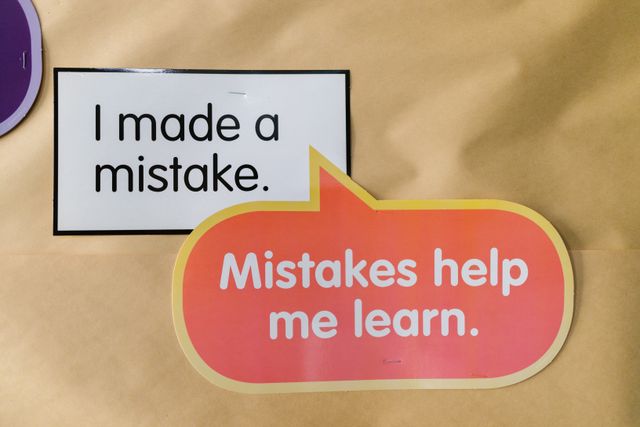
For generations, education systems have treated mistakes primarily as something students should avoid. A wrong answer in an examination, an incorrect response in a quiz, a failed assignment, or an unsuccessful project often becomes a mark against a learner’s performance. Students are encouraged to correct their errors, improve their scores, and move forward, but the educational value of the mistakes themselves is rarely preserved. As a result, an important part of the learning process disappears once the correct answer is found. The student may remember the final solution without understanding why the original approach failed, what misconception caused the error, or how the experience changed their thinking.
Digital education creates an opportunity to reconsider this approach. An online learning platform can record not only what a student completes successfully but also how the student approaches a problem, where their understanding breaks down, how they respond to feedback, and whether they eventually overcome the difficulty. These learning experiences could form the basis of a Mistake Portfolio: a structured record of errors, misconceptions, experiments, corrections, and the progress that follows them. Instead of defining a learner through unsuccessful attempts, the portfolio would demonstrate how that learner develops knowledge, adapts strategies, and builds stronger capabilities over time.
For an education platform such as EasyShiksha, which connects courses, quizzes, certificates, internships, practical learning, and career development, the Mistake Portfolio could become a meaningful extension of the traditional student record. It could connect classroom-style learning with practical problem-solving and help students understand their own development. The objective would not be to collect every wrong answer indefinitely or make students feel that their failures are being monitored. It would be to transform useful learning signals into opportunities for reflection, personalised support, and measurable improvement.
Also Read: The Abandoned Skill Problem: What Happens to Skills Students Start But Never Finish Developing?
What Is a Mistake Portfolio?
A Mistake Portfolio is a learner-controlled record of meaningful errors and the learning experiences associated with them. It captures more than an incorrect answer or a low score. It records the nature of a mistake, the reasoning that may have produced it, the feedback or explanation that helped the learner understand it, and the evidence that the learner can now apply the correct concept. The portfolio may include recurring misconceptions, unsuccessful project attempts, revised solutions, improved decision-making, and reflections on strategies that eventually worked.
Consider a student learning spreadsheet analysis. During an early exercise, the student uses an incorrect formula because they misunderstand the difference between relative and absolute cell references. A conventional learning system might mark the answer incorrect, reveal the right formula, and calculate the score. A Mistake Portfolio could preserve the underlying concept that caused the problem, the student’s revised formula, a short explanation of the correction, and a later exercise demonstrating that the student can now use cell references correctly. The important record is not simply that an error occurred. It is that a specific misunderstanding was identified and subsequently addressed.
The same principle applies across different learning environments. A student studying programming might record a logical error and the debugging method used to resolve it. A learner taking a digital marketing course might document an unsuccessful campaign hypothesis and the evidence that changed their approach. Someone practising communication skills could reflect on a presentation that lacked structure and compare it with a revised presentation. In each case, the mistake becomes part of a larger narrative of capability development.
Why Traditional Education Records Miss Valuable Learning Evidence
Most educational records focus on completed courses, examination scores, grades, attendance, and certificates. These indicators are useful because they provide a relatively simple way to communicate academic progress. However, they offer only a partial view of how learning develops. Two students may receive the same final score while having very different learning experiences. One may understand the concepts from the beginning, while the other may have struggled repeatedly, identified misconceptions, sought feedback, and eventually reached the same level of understanding.
A final score rarely explains these differences. It does not necessarily reveal whether a student can diagnose a problem independently, learn from criticism, recognise an unreliable assumption, or transfer knowledge into a new situation. These abilities become especially important when students move from examinations into projects, internships, workplaces, and professional responsibilities. Real tasks rarely provide a complete set of instructions or guarantee that the first attempt will succeed.
The problem becomes more significant in digital learning. Students may complete quizzes, submit assignments, repeat lessons, and attempt practical exercises across multiple courses. Yet these activities can remain disconnected. A student might repeatedly struggle with data interpretation in a finance course and again encounter the same underlying difficulty in a business analytics course without the platform recognising the relationship. The student sees separate tasks, while the recurring learning barrier remains hidden.
A Mistake Portfolio could help connect these experiences. By recording recurring patterns and their resolution, EasyShiksha could support a more continuous understanding of learning progress. Instead of viewing each quiz or course as an isolated activity, the platform could recognise how one learning experience influences another. This would help shift the emphasis from collecting educational achievements to understanding how capabilities are built.
From Wrong Answers to Learning Signals
The first major challenge in designing a Mistake Portfolio is interpreting errors correctly. An incorrect answer does not automatically reveal why a student is struggling. The same response may result from a conceptual misunderstanding, confusing wording, insufficient practice, a calculation error, a momentary lapse in attention, or unfamiliarity with the question format. If a digital platform records an error without considering these possibilities, it may produce inaccurate conclusions about the learner.
A more useful system would treat mistakes as learning signals that require interpretation. For example, if a student repeatedly confuses revenue with profit in business-related quizzes, the platform could identify a possible conceptual gap. If the student answers similar questions correctly after reviewing an explanation, the system could record evidence of improvement. If the same error returns in a practical assignment, the platform could suggest a deeper review rather than simply repeating the original lesson.
EasyShiksha could use this approach to connect quiz performance with course content, revision activities, and practical exercises. A mistake in an introductory programming quiz might trigger a short debugging exercise. A recurring misunderstanding in accounting could lead to a worked example followed by a new problem. A learner who struggles to apply a theoretical concept might be directed towards a project that demonstrates how the concept works in practice.
The system should avoid claiming certainty when the evidence is incomplete. A pattern of incorrect answers may indicate a knowledge gap, but it should not automatically become a permanent label about a student’s ability. Students should be able to provide context, dismiss an incorrect interpretation, or demonstrate their understanding through an alternative task. The portfolio is most valuable when it supports investigation and improvement rather than pretending that every error has a single obvious explanation.
The Anatomy of a Digital Mistake Portfolio
A useful Mistake Portfolio would combine several related forms of evidence. The first would be the original learning challenge, including the question, task, or project requirement that produced the difficulty. Preserving this context matters because an error cannot be understood accurately when separated from the situation in which it occurred. A wrong answer to a difficult application-based question may reveal something different from an incorrect response to a basic definition.
The second element would describe the mistake itself. This description should focus on the problem rather than judge the student. Instead of labelling a learner as weak in mathematics, the record might identify difficulty selecting the correct operation in a particular type of word problem.
The third element would capture the correction process. This might include a revised answer, a debugging note, a short explanation written by the student, a teacher’s feedback, or evidence from an additional exercise.
The fourth element would record subsequent progress. A student might complete a new quiz, solve a similar problem with fewer hints, improve a project, or apply the concept in an internship assignment. This follow-up evidence helps distinguish between a correction made immediately after seeing an explanation and a skill that has become sufficiently stable to use independently.
Finally, the portfolio could include a reflection written in the student’s own words. The reflection might explain what the learner misunderstood, which strategy proved helpful, or what they would do differently next time. Not every small mistake needs a detailed reflection, but meaningful errors can provide opportunities for metacognition: the ability to think about one’s own thinking and learning strategies.
How EasyShiksha Could Build Mistake Portfolios Across Its Learning Ecosystem
EasyShiksha’s combination of online courses, quizzes, practical learning opportunities, certificates, and career-oriented resources provides a useful foundation for exploring the Mistake Portfolio model. Instead of introducing it as an isolated feature, the platform could connect error-based learning records with activities that already form part of a student’s educational journey.
During an online course, learners could encounter short diagnostic activities that identify concepts requiring additional attention. When a meaningful mistake occurs, the platform could explain the underlying concept and offer an appropriate follow-up task. If the student demonstrates improvement, the record could be updated to show the change. Over time, the learner would gain a clearer picture of which concepts required effort, which learning strategies worked, and where further practice might be useful.
The portfolio could also connect to projects and internships. Once students move beyond quizzes, the nature of mistakes changes. They may misunderstand a project requirement, choose an unsuitable tool, overlook a constraint, or struggle to communicate their findings. With appropriate consent and privacy safeguards, students could document selected examples of these experiences and show how they improved their work. This would create a bridge between academic learning and the kinds of problem-solving that employers often expect from early-career professionals.
Certificates could complement this model by recognising course completion or demonstrated learning outcomes, while the Mistake Portfolio would provide additional evidence of development. The two should not be confused. A portfolio would not automatically replace a recognised qualification, nor should a student’s errors become part of the certificate itself. Instead, it could provide an optional record that helps learners explain how they developed a capability beyond simply completing a course.
Turning Repeated Errors into Personalised Learning Paths
One of the most promising applications of a Mistake Portfolio is the ability to identify recurring patterns across different subjects and learning activities. Students do not always struggle because they lack effort. Sometimes, an earlier concept was never fully understood, and the gap continues to affect more advanced learning. A learner who has difficulty interpreting percentages may later struggle with financial analysis, business statistics, marketing performance, or data visualisation. Treating each new difficulty separately can lead to repeated frustration without addressing the original cause.
A mistake-aware learning system could help identify these connections. If a student repeatedly struggles with a foundational concept, EasyShiksha could recommend a short revision activity before the learner moves further into a related subject. The recommendation would be based on relevant evidence rather than a generic suggestion to repeat an entire course. This could make revision more focused and help students spend time on the concepts that matter most to their progress.
However, personalisation should not become an endless cycle in which students are prevented from advancing until every earlier error has been resolved. Learning is rarely perfectly linear, and some uncertainty is necessary for intellectual growth. The purpose of a Mistake Portfolio is to provide useful guidance, not impose rigid control over the learning journey. Students should retain the freedom to explore new subjects, revisit older material when needed, and choose how they want to address their learning gaps.
The Role of Artificial Intelligence in Understanding Student Errors
Artificial intelligence could make Mistake Portfolios more useful by helping interpret large volumes of learning evidence. A digital platform may collect responses from quizzes, attempts at exercises, revisions to projects, and explanations written by learners. Reviewing every interaction manually would be difficult at scale. AI systems could assist by identifying recurring patterns, grouping similar errors, and suggesting learning resources that address the concepts involved.
For example, an AI-supported learning assistant on EasyShiksha could notice that a student understands basic programming syntax but repeatedly struggles to break a complex problem into smaller steps. Rather than recommending an entire beginner programming course, it could suggest exercises focused on decomposition, logical sequencing, and debugging. The portfolio could then track whether the learner becomes more effective at solving similar problems without assistance.
Nevertheless, AI-generated interpretations must remain open to review. A system may misunderstand a student’s explanation, misclassify an unusual but valid solution, or incorrectly infer a misconception from a limited number of responses. EasyShiksha would need clear ways for learners to challenge recommendations, request another explanation, and demonstrate their understanding through different methods. Human educators should remain involved when errors have complex causes or when decisions could significantly affect a student’s opportunities.
The goal should be to use AI as an assistant in the learning process, not as an unquestionable judge of student ability. A Mistake Portfolio becomes educationally valuable when technology helps students understand their progress more clearly without removing their agency.
Mistake Portfolios and the Development of Metacognition
Students often focus on whether an answer is correct without examining how they arrived at it. Yet the reasoning behind an answer can be just as important as the answer itself. Metacognition helps learners recognise their assumptions, evaluate their strategies, monitor their understanding, and decide when they need additional support. A Mistake Portfolio could provide a practical structure for developing these abilities.
When students review earlier mistakes, they can begin identifying patterns in their own behaviour. One learner might realise that they start assignments before fully understanding the requirements. Another may discover that they memorise definitions successfully but struggle to apply them in unfamiliar situations. A third may notice that they repeatedly avoid difficult questions rather than attempting a solution. These observations can help students make deliberate changes to their learning strategies.
The reflections should remain concise enough to fit naturally into the learning experience. Requiring a lengthy explanation after every incorrect quiz response would create unnecessary friction and could discourage participation. A more thoughtful design would reserve deeper reflection for meaningful challenges, recurring misunderstandings, and important milestones. This would make the portfolio useful without turning it into another assignment students must complete merely to progress.
Over time, learners could become better at recognising when they understand a concept, when they are relying on guesswork, and when they need another form of explanation. These abilities are valuable far beyond a single course because they support independent learning throughout a student’s education and career.
Could a Mistake Portfolio Improve Career Readiness?
The professional value of a Mistake Portfolio depends on how carefully it translates learning experiences into evidence of development. Employers generally need to understand what candidates can do, how they approach unfamiliar tasks, and whether they can respond constructively to feedback. A record of mistakes alone would not establish these qualities. However, selected examples of problems identified, strategies revised, and results improved could help demonstrate them.
Imagine a student completing a digital marketing course who initially misunderstands how to evaluate campaign performance. After reviewing the relevant concepts, the student analyses a sample campaign, identifies an inappropriate metric, and revises the evaluation. The student later applies the improved method to a project. A carefully documented example could show the learner’s reasoning, response to feedback, and ability to improve an analytical process.
A programming student might document how an early application failed because of a faulty assumption, then explain how testing and debugging produced a more reliable solution. A business student could describe how an initial project plan overlooked an important constraint and how the revised approach accounted for it. These examples would not celebrate failure for its own sake. They would demonstrate the process through which a learner moved from an incomplete approach to a stronger result.
Such a feature could complement existing career guidance and internship preparation resources. It could help students explain what they learned from difficult tasks during interviews, while encouraging them to focus on evidence rather than unsupported claims about their abilities. Still, employers should not be encouraged to rank applicants by the number or severity of recorded mistakes. The relevant evidence is the quality of the learning and improvement demonstrated, not the volume of errors accumulated.
Privacy, Consent, and the Risk of Permanent Failure Records
A Mistake Portfolio introduces an important ethical question: how can an education platform preserve useful learning evidence without creating a permanent record that disadvantages students? Educational mistakes are often temporary, contextual, and necessary for progress. If every incorrect answer were stored indefinitely and made visible to teachers, institutions, or employers, students might become afraid to experiment. They could avoid challenging activities, choose easier questions, or stop admitting uncertainty because they fear that their mistakes will affect future opportunities.
This risk would undermine the purpose of the portfolio. Students need an environment in which they can make errors without feeling that every unsuccessful attempt will become part of their permanent identity. EasyShiksha would therefore need to distinguish between private learning records and evidence that students deliberately choose to share. The default should favour the learner’s control, with clear explanations of what is recorded, why it is useful, and who can access it.
Another concern is algorithmic bias. If an AI system interprets language differences, accessibility needs, or unfamiliarity with a question format as evidence of weak understanding, it may generate misleading conclusions. Learners who require alternative explanations or additional time could be unfairly characterised if the system relies on narrow performance indicators. Careful evaluation, accessible design, transparent explanations, and opportunities to challenge automated interpretations would help reduce these risks.
Most importantly, the portfolio should never become a secret scoring system for judging a student’s intelligence, employability, or future potential. Its purpose should be to support learning and provide optional evidence of improvement. A student who chooses not to share their mistake history should not be penalised for protecting their privacy.
Measuring Progress Beyond the Number of Errors
A successful Mistake Portfolio should not measure progress simply by counting how many mistakes a student makes. A learner who attempts difficult projects may generate more errors than someone who repeatedly completes easy exercises. The first learner could be developing greater problem-solving ability, while the second may be avoiding meaningful challenges. Without context, an error count would provide little useful information.
More meaningful indicators would examine whether students recognise their misconceptions, apply feedback, solve related problems independently, and transfer learning to new situations. A platform could track whether a recurring error becomes less frequent, whether a student requires fewer hints, or whether an improved strategy works across different types of tasks. These indicators would provide a more balanced view of learning development.
The time required to correct a mistake should also be interpreted carefully. Rapid correction is not always evidence of deeper understanding, and a slower learning process does not necessarily indicate poor ability. Some concepts require repeated practice before they become stable. Students should have the opportunity to revisit a topic after a period of time so that the platform can assess whether their understanding lasts beyond the immediate lesson.
EasyShiksha could connect these indicators with course progress and practical assessments while keeping the measures understandable. Instead of presenting a confusing score for the quality of a student’s mistakes, the platform could show clear milestones such as a concept identified, a correction demonstrated, and an application completed independently. This would make progress easier to interpret and would help learners understand what they need to do next.
The underlying principle is straightforward: the portfolio should evaluate the development that follows a mistake rather than treat the mistake itself as a measure of failure.
Implementing the Mistake Portfolio in Stages
Introducing this concept across an education platform would require careful planning. A practical starting point would be a small pilot within a limited selection of courses and quizzes. The initial version could focus on recurring conceptual errors, explanations, revised answers, and follow-up questions. Students would be able to review their records and choose whether to save selected reflections.
The next stage could connect mistake records with personalised revision. When a student repeatedly struggles with a concept, the system could recommend a targeted explanation or exercise. After the learner demonstrates improvement, the portfolio could record that evidence and reduce unnecessary repetition. This would test whether the feature genuinely helps students understand difficult material rather than merely generating additional data.
A later stage could introduce project-based records and optional portfolio sharing. Students might document a challenge encountered during a practical assignment, explain how they addressed it, and attach the improved result. The platform could then help learners connect these examples to relevant skills and career interests. Any such feature would need to preserve ownership of the work and ensure that private educational information is not shared without consent.
The effectiveness of each stage should be evaluated through learning outcomes, student feedback, accessibility, and the accuracy of error interpretation. EasyShiksha would need to examine whether learners become better at correcting misconceptions, retaining knowledge, and applying concepts independently. It should also investigate whether the feature increases anxiety or creates unnecessary administrative work. If students feel monitored rather than supported, the design needs to change.
The Future of Education: From Achievement Records to Learning Histories
Education platforms have traditionally organised student progress around what learners complete. Courses, marks, certificates, and qualifications provide visible evidence of achievement, but they do not always explain the process through which students develop their abilities. A Mistake Portfolio offers a complementary perspective by recording selected parts of that process. It recognises that learning is not a perfectly smooth sequence of correct answers but a changing process of testing ideas, discovering limitations, receiving feedback, and improving understanding.
For EasyShiksha, this concept could strengthen the connection between learning activities and practical development. A student might begin with a course, identify a difficult concept through a quiz, practise a correction, apply the knowledge in a project, and eventually demonstrate the capability during an internship. The portfolio could connect these stages without reducing the student to a history of errors. It would show how an initial difficulty became an opportunity to build a stronger skill.
This approach could also encourage a healthier attitude towards learning. When students see that a mistake can lead to a clear next step, they may become more willing to attempt challenging tasks and seek feedback. Teachers and learning systems could use the same evidence to provide more focused support, while students could gain a better understanding of their own strengths and development needs.
However, the Mistake Portfolio should remain a support system rather than another compulsory credential. Its value lies in helping learners reflect, recover, and improve, not in creating a new ranking system based on failure. The most meaningful educational record would preserve a student’s agency and demonstrate progress without exposing every moment of uncertainty.
Conclusion: Making Mistakes Useful Without Making Them Permanent Labels
The Mistake Portfolio presents an opportunity to rethink how digital education records learning. Instead of treating every incorrect answer as an isolated failure, it could help students understand why errors occur, identify recurring misconceptions, and document the progress that follows. By combining reflection, targeted practice, and evidence of improvement, the model could provide a richer picture of learning than scores and certificates alone.
EasyShiksha could explore this concept by connecting quizzes, courses, practical assignments, and career-development activities through a learner-controlled record of selected learning challenges. Artificial intelligence could help identify patterns and recommend relevant support, while transparent privacy controls and human oversight would help protect students from unfair interpretations. The system should reward neither the number of mistakes nor the appearance of struggle, but the ability to learn from experience and apply knowledge more effectively.
Ultimately, a student’s educational journey should not be defined only by what they answered correctly on the first attempt. It should also recognise how they responded when something went wrong, what they learned from the experience, and how their understanding changed. A thoughtfully designed Mistake Portfolio could help make that development visible, turning errors into useful learning evidence while ensuring that every student retains the freedom to grow beyond their past mistakes.
Get Some Courses: Mastering Emotional Intelligence for Project Success: A Comprehensive Guide , Ethical hacking and penetration testing with Kali Linux




























