



















For many students, choosing a college has traditionally been a long and complicated process. Students and families often begin by discussing possible careers, identifying suitable courses, searching for institutions, comparing programmes, checking eligibility requirements, considering fees and location, and finally trying to understand which option fits their educational goals.
The process can take weeks or even months. Information is often spread across college websites, admission portals, education directories, brochures, social media pages, counselling services and conversations with friends or relatives. A student may know what course they want to study but still struggle to understand where they can study it.
At the same time, students have become increasingly comfortable discovering products, services, entertainment and information through digital search. If someone wants to learn a new skill, they can search for an online course and find multiple possibilities within seconds. If someone wants to learn a language, practise coding or understand a financial concept, digital platforms can immediately provide learning options.
This raises an interesting question for higher education: what if discovering a college could be almost as straightforward as discovering an online course?
The idea does not mean that selecting a college should become a one-click decision. Higher education involves significant academic, financial and personal considerations. Instead, it suggests that the discovery stage can become simpler, more organised and more connected.
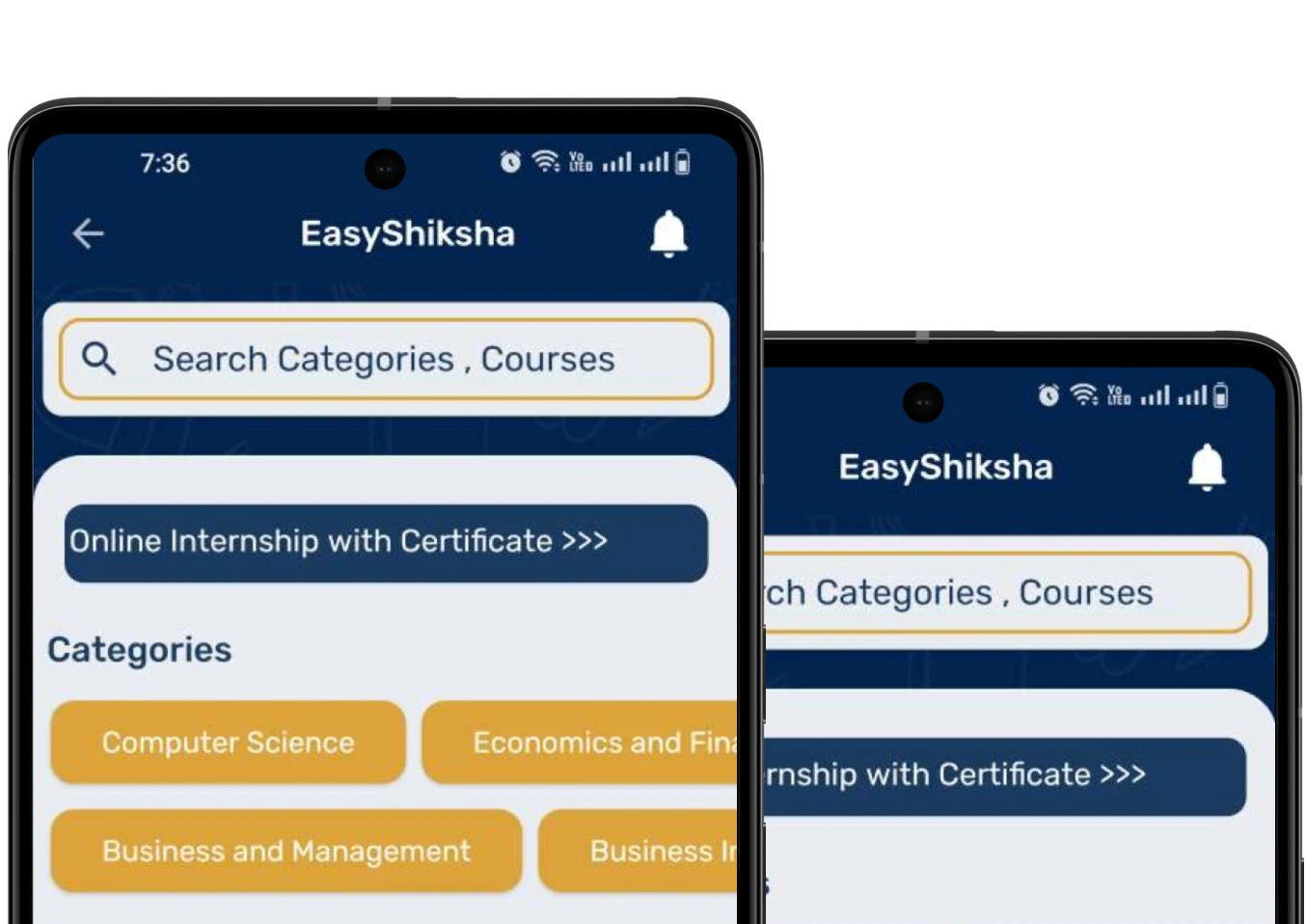
A platform such as EasyShiksha can play an important role in this changing model by bringing course discovery, online degrees, school and university discovery, quizzes, career counselling, internships and other learning opportunities into a broader digital education ecosystem.
The result could be a new way of thinking about college discovery: not as a separate search that begins after a student has already decided everything, but as a natural part of the student’s digital learning journey.
Also Read: The Student Who Didn’t Know What to Search For—Until a Digital Learning Journey Guided the Way
Why College Discovery Often Feels More Difficult Than Course Discovery
Searching for an online course can be relatively straightforward. A student can enter a topic such as digital marketing, artificial intelligence, finance, programming or cybersecurity into a search bar and immediately encounter learning opportunities. Course descriptions generally provide information about the subject, duration, format and learning outcomes. College discovery can be more complicated because a college is not simply a course provider.
A student may need to understand the institution, programme structure, degree type, eligibility, admission process, location, learning mode, specialisations, academic environment, costs and future opportunities. Different institutions can offer programmes with similar names but very different structures.
The challenge therefore is not merely finding colleges. The challenge is finding relevant colleges in the context of what the student actually wants to study. This is where digital discovery can evolve. Instead of asking students to begin with a list of college names, a digital education ecosystem can allow them to begin with their learning interests.
What If Students Started With What They Want to Learn?
Imagine a student searching for “data science.” Instead of seeing only online tutorials and short-term courses, the student could also explore degree programmes, institutions, skill-building opportunities and career information related to the field. The search would become more meaningful because it connects learning with education pathways.
A student interested in cybersecurity could discover introductory courses, quizzes, career information, relevant degree programmes and institutions offering related education. A student interested in business could explore finance, marketing, management and entrepreneurship before investigating degree options. This approach changes the starting point.
The student does not have to know the name of a particular college before beginning the search. They can begin with the subject, skill or career area that interests them. The platform then becomes a bridge between curiosity and formal education.
College Discovery as Part of the Learning Journey
One of the biggest opportunities in digital education is connecting activities that are usually treated as separate. A student may first encounter a subject through a quiz. The quiz creates curiosity. The student then takes an introductory course. After learning the basics, the student explores related skills and career opportunities. Eventually, the student begins looking at degree programmes and institutions.
In this model, college discovery does not happen suddenly. It develops naturally from the student’s learning journey. This is especially relevant for students who are uncertain about their future. They may not know which degree to choose because they have not yet explored enough subjects. Digital learning can give them opportunities to experiment before making larger educational decisions.
For example, a student interested in technology may begin by taking a basic coding quiz. The student then explores programming through an online course. After completing several learning activities, they may become interested in computer science or software development. At that point, searching for a relevant degree programme becomes more meaningful. The college search now has context.
From College Names to Educational Possibilities
Traditional college discovery often begins with names. Students may ask which colleges are available in a city, which institutions offer a particular degree, or which colleges have certain rankings or reputations. While these factors can be relevant, starting with names can sometimes make the discovery process unnecessarily narrow.
A digital education platform can instead begin with possibilities.What does the student want to learn? What kind of qualification are they looking for? Are they interested in an online or campus-based pathway? What skills do they want to develop? What kind of career areas are they exploring?
Once these questions become clearer, college discovery can become more focused. This approach does not eliminate comparison. It improves the starting point for comparison.
The Role of Search in Modern Education
Search has become one of the most familiar digital behaviours. People search for restaurants, products, travel destinations, tutorials, jobs and entertainment. Education can follow a similar discovery model while recognising that educational decisions require more careful consideration.
A search-based college discovery experience could allow students to begin with natural questions. A student might search for a degree in computer science. Another might search for an online business degree. Someone else might want to discover colleges offering engineering programmes.
A student still exploring their interests might search for careers related to mathematics or biology. The platform can then connect the search to relevant educational information. The objective is not to reduce college selection to a search result. It is to make the discovery stage easier to navigate.
EasyShiksha as a Connected Education Discovery Platform
EasyShiksha’s broader education ecosystem creates an opportunity to connect college discovery with other parts of student life. A student may visit the platform looking for an online course and discover information about degrees. Another student may begin by exploring a university and then discover related courses or internships.
A student interested in a particular career may use quizzes and career counselling before exploring educational pathways. This creates multiple entry points into the same learning ecosystem. That flexibility matters because students do not all begin their journeys in the same way.
Some students know exactly what they want. Others know only what they do not want. Some are interested in a subject but have no idea what careers connect with it. Others are primarily looking for an affordable or flexible education option. A connected platform can support different starting points without requiring every student to follow the same path.
Course Discovery Can Become a Gateway to College Discovery
The relationship between online courses and formal education is becoming increasingly interesting. A short online course can introduce a student to a subject before they commit to studying it at a deeper level. This can be especially valuable for students deciding between multiple academic directions.
Suppose a student is unsure whether to pursue finance or marketing. Instead of choosing immediately, they could explore introductory learning experiences in both areas.
The student might discover that they enjoy analysing financial concepts but are also interested in communication and consumer behaviour. That discovery could lead to further exploration of finance, marketing analytics or business programmes.
The course has therefore served as a discovery tool. The next stage is not necessarily another course. It may be a degree programme or college. This is how digital learning can connect short-term exploration with long-term educational planning.
Quizzes Can Help Students Understand Their Interests
Quizzes can also play a role in college discovery. A student may not know which subject area deserves further exploration. A well-designed educational quiz can introduce different concepts and help learners reflect on what interests them.
For example, a student might participate in quizzes covering technology, business, science, communication or creative subjects. Their experiences can encourage further exploration.
The quiz should not be treated as an automatic career or college selector. Educational choices involve many factors that cannot be determined by a short assessment.
Instead, quizzes can provide a starting point. They can help students ask better questions about themselves. Once those questions become clearer, the student can explore relevant courses, careers, degrees and institutions.
Career Counselling Can Make College Search More Meaningful
College selection is closely connected with career planning.
Students often choose a degree because it sounds attractive or because people around them recommend it. Career counselling can provide another perspective by helping students understand the relationship between educational pathways and possible professional directions.
Within a connected digital ecosystem, career counselling can be positioned alongside college discovery.
A student exploring a career can learn about the skills involved, investigate relevant courses, understand possible degree pathways and then discover institutions offering those programmes.
This sequence can help students move from broad uncertainty to more informed exploration.
For EasyShiksha, the connection between career counselling and education discovery is particularly relevant because the platform can bring these activities closer together rather than treating them as completely separate services.
Online Degrees Expand the Discovery Model
College discovery is no longer limited to physical campuses. Online degree programmes have created additional possibilities for students seeking formal higher education through digital learning environments. Students may value flexibility, accessibility and the ability to study from different locations.
However, discovering an online degree requires the same kind of careful attention as discovering a traditional programme. Students need to understand the institution, programme, eligibility requirements, curriculum, learning format and other relevant details.
A digital education ecosystem can help students discover these possibilities while also connecting them with supplementary learning. For example, a student considering an online degree in business might also explore digital marketing courses, quizzes, internships and career guidance. The degree becomes one part of a larger education journey.
College Discovery Should Not End With Admission
Another important shift is what happens after students find an institution. College discovery is often treated as complete once a student chooses a programme and completes admission. But the educational journey continues.
Students need to develop skills, participate in projects, seek internships, build professional networks, prepare for employment and continue learning. This is where a connected education ecosystem can create value.
A student who discovers a degree programme can also explore relevant courses and internship opportunities. During college, quizzes can support revision and skill assessment. Career counselling can help students prepare for professional transitions. The platform remains useful beyond the initial discovery moment.
From Degree Discovery to Skill Discovery
Modern students increasingly think about education in terms of skills as well as qualifications. A degree provides a formal educational foundation, but students may also need specific technical, communication, analytical or digital skills depending on their goals. This creates an opportunity to connect college discovery with skill discovery.
A student exploring computer science could discover courses in programming, cloud computing, cybersecurity or artificial intelligence. A business student could explore digital marketing, data analytics, finance or communication. An engineering student could supplement formal education with emerging technology skills.
This approach makes the college search more future-oriented without assuming that one educational path guarantees a particular career outcome. The student can build a combination of formal education and practical skills.
Internships Can Complete the Connection
The connection between education discovery and internships is equally important. Students often discover internships only after they have already spent several years in higher education. Yet practical exposure can help students understand how classroom learning connects with professional environments.
A platform that connects college discovery with internships can provide a more continuous journey. A student discovers a degree, develops related skills through online courses, tests knowledge through quizzes and then looks for practical experience.
The internship can also help the student reassess their direction. Perhaps they discover that they enjoy a particular part of their field more than expected; Perhaps they identify a skill they need to strengthen; Perhaps they become interested in another role. The learning journey continues.
The Digital Student Profile Can Connect Everything
A digital education profile can provide another layer of continuity. Instead of having college information, course certificates, quiz results and internship experiences scattered across different systems, students could gradually build a consolidated learning identity.
The profile might reflect the student’s educational interests, completed courses, certificates, projects, internships and other learning milestones. This could become useful when students move from exploration to application.
A student researching a college can understand what they have already explored. A college student preparing for an internship can review their skills and completed learning activities. A graduate preparing for employment can use the profile as part of their broader professional presentation. The profile becomes a record of development rather than simply a list of qualifications.
The Importance of Personalised Discovery
Not every student needs to see the same information. A school student exploring higher education may need basic explanations about degree options. A college student may need more detailed information about specialisations and career pathways. A graduate may be more interested in internships, advanced courses or professional certifications.
Personalisation can help make digital discovery more relevant. A platform could use a student’s current stage, interests and previous learning activity to surface relevant information. However, personalisation should support exploration rather than restrict it.
Students should still be able to discover subjects outside their existing interests. Unexpected discoveries can be valuable in education. A good digital education platform therefore needs to balance relevance with openness.
Making College Discovery More Accessible
Digital discovery can also reduce some geographic barriers. A student living in a smaller city or town may have limited access to local counselling resources or information about institutions outside their region. Online discovery can introduce students to a broader range of educational possibilities.
Students can investigate institutions in different cities and explore online degree programmes without having to physically travel just to gather basic information.
This does not remove financial, geographic or social barriers entirely. But it can make information more accessible. For Indian students in particular, where educational choices can involve institutions across different states and cities, a central digital discovery experience can help organise the initial research process.
The Challenge of Too Much Choice
Making college discovery easier does not necessarily mean showing students more options. Too many choices can create another form of confusion. A student searching for a degree may encounter hundreds of institutions and programmes. Without context, a large list can be overwhelming.
This is why discovery should be structured. Students need meaningful information that helps them understand differences between programmes and institutions.
Filters, search categories, educational pathways, course information and career context can help make large amounts of information easier to navigate. The goal is not simply to create a bigger database. It is to create a better discovery experience.
Trust and Transparency Matter
Education decisions can have long-term consequences, which makes trust particularly important. Students need reliable information about programmes, eligibility, institutions, fees, learning modes and other relevant details.
Digital platforms should clearly distinguish factual information from promotional content and should encourage students to verify important details with official institutions when necessary. EasyShiksha’s role in this environment can be that of a discovery and learning platform rather than a replacement for careful student research.
Digital convenience should not eliminate due diligence. The easier it becomes to discover an educational opportunity, the more important it becomes to provide clear information that helps students investigate it responsibly.
What If College Search Became a Learning Experience?
This is perhaps the most interesting possibility. College discovery does not have to be treated as a simple database search. It can become a learning experience in itself.
A student can discover a field, understand the skills involved, explore relevant courses, investigate career possibilities, compare educational pathways and then discover institutions offering relevant programmes.
The student learns about themselves while learning about education. This makes the process more active.
Instead of asking only, “Which college should I choose?” the student begins asking, “What do I want to learn, why do I want to learn it, what pathway can help me learn it, and where can I pursue that pathway?” These questions create a stronger foundation for educational exploration.
The Future Could Be Searchless in Some Moments
The future of digital education may not always require students to enter a search query.
As learning platforms become more connected, recommendations can emerge from previous activity.
A student who completes a course in programming might discover related degree pathways. Someone repeatedly exploring business quizzes might encounter relevant courses and career information. A student completing an online degree might receive information about internships or additional skill-building opportunities.
This does not mean students lose control over discovery.
Instead, the platform becomes more responsive to the journey already taking place.
The search box remains available, but the student does not always have to know exactly what to type.
From Searching for a College to Discovering an Educational Path
The difference between searching for a college and discovering an educational path may seem small, but it represents a significant shift. College search is institution-focused. Educational discovery is student-focused. The first asks where a programme exists.
The second asks what the student wants to learn and which educational pathways can support that goal. Both questions matter, but starting with the learner can make the process more meaningful.
This approach also fits the changing nature of education, where students increasingly combine formal degrees with online courses, certificates, internships, projects and other forms of skill development. The college becomes one part of the journey rather than the entire journey.
How EasyShiksha Can Support the Connected Discovery Journey
EasyShiksha can bring together several of the components needed for this model.
A student can begin with course discovery and gradually explore degrees, schools, colleges and universities. Quizzes can help students engage with subjects and test their knowledge. Career counselling can provide guidance during decision-making. Online learning can support skill development, while internships can provide practical exposure.
Educational games can make learning more interactive, especially for younger learners and students who enjoy challenge-based experiences. This creates a broader digital environment where students do not have to leave the ecosystem every time their educational question changes.
The student may enter asking about a course and later become interested in a degree. They may enter searching for a university and later discover an internship. They may begin with a quiz and eventually explore an entire career pathway. The platform becomes useful because the student’s needs are allowed to evolve.
A Future Student’s College Discovery Journey
Imagine a student named Meera. She knows she enjoys mathematics but is uncertain about what to do after school; She begins with a quiz and discovers that she enjoys analytical problem-solving.
She explores an introductory data science course. The course introduces her to data, statistics and basic programming. She takes quizzes to test her understanding and discovers that she enjoys working with data. The next stage is career exploration.
She learns about different roles that involve analytics and begins investigating relevant degree pathways. Instead of searching randomly for colleges, she now searches for institutions offering programmes connected to the subjects and skills she wants to explore.
She discovers several possibilities and investigates them further.
During college, she continues using online courses to develop technical skills. She participates in an internship and gains practical exposure. Her digital learning profile gradually reflects the courses, quizzes, certificates and experiences she has completed.
The college was important, but it was not the starting point. The starting point was curiosity.
Conclusion: Making Discovery Easier Without Making Decisions Automatic
The future of college discovery does not have to mean reducing a complex educational decision to a simple search result. Instead, it can mean making the journey toward that decision easier.
Students can begin with interests rather than institution names. They can explore subjects through quizzes and courses, investigate career possibilities through guidance, discover degree programmes, explore schools and universities, develop practical skills, pursue internships and gradually build a clearer educational identity.
This approach recognises that students often do not begin with complete certainty. They discover what they want by learning.
For EasyShiksha, the opportunity lies in connecting the different stages of this process. Online courses can introduce students to subjects. Quizzes can encourage exploration and assessment. Career counselling can provide context. Online degrees can provide formal pathways. School, college and university discovery can help students investigate institutions. Internships can connect education with practical experience, while certificates and digital profiles can document progress.
The result is a more connected way of thinking about higher education discovery. A student should not necessarily have to know the name of a college before beginning their search. They can start with a subject, a skill, a question or even a quiz.
Get Some Courses: Line Follower Robot Master Robotics with Precision and Code , Master Leadership: Enhance EQ, Communication & Resilience