


























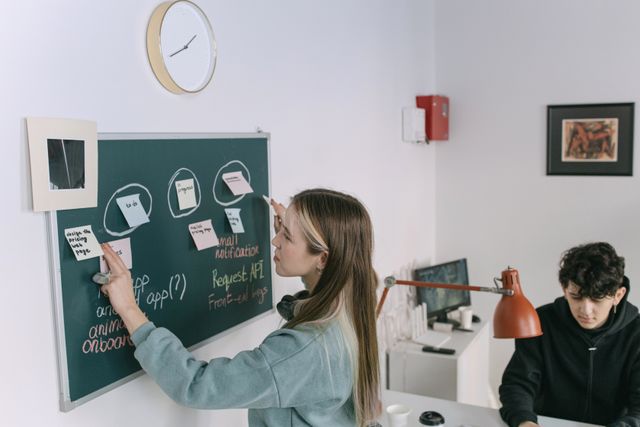
Traditional education usually follows a forward direction. Students enrol in a degree or course, study a prescribed curriculum, complete examinations, earn certificates and eventually begin searching for employment. This structure has helped organise education for generations, but it does not always guarantee that students develop the capabilities required for the jobs they eventually pursue. A learner may spend several years studying a subject without clearly understanding how its concepts translate into professional responsibilities. Even after graduation, students may discover that employers expect practical skills, tools, projects and workplace experience that their education did not adequately prepare them to demonstrate.
This raises an important question for the future of education: what if the learning process began with the job a student wanted rather than the course they wanted to study? Instead of selecting a course first and discovering its career relevance later, students could identify a target role, examine what that role requires and work backward to determine which skills, courses, projects, assessments and internships they need. This approach is known as the Reverse Curriculum, a career-oriented method of designing education from a defined professional outcome toward the learning experiences needed to achieve it.
For an education ecosystem such as EasyShiksha, Reverse Curriculum could connect online courses, quizzes, university programmes, certificates, practical projects, internships and career guidance into a more purposeful learning pathway.
The objective is not to reduce education to job training or eliminate the value of broad academic learning. It is to establish a stronger connection between what students learn and what they eventually want to accomplish. Reverse Curriculum makes career outcomes the starting point for educational planning while preserving flexibility, foundational knowledge and lifelong learning.
Also Read: Career Counterfactual: What If Students Could Simulate Five Different Professional Futures?
What Is Reverse Curriculum?
Reverse Curriculum is an approach to educational design in which a desired outcome is defined first and the learning pathway is developed backward from that outcome. In a conventional curriculum, students usually begin with a prescribed sequence of subjects. In a reverse curriculum, the starting point is a target capability, professional role or career objective. The next step is to identify what someone needs to know and demonstrate to make meaningful progress toward that objective.
Consider a student who wants to become a UI/UX designer. A traditional approach might begin with a general design course and leave the learner to discover the next steps independently. A Reverse Curriculum approach would begin by examining the responsibilities of a UI/UX designer, such as understanding users, researching problems, designing interfaces, creating prototypes, evaluating usability and communicating design decisions. These responsibilities would then be translated into specific capabilities and learning milestones.
The student could begin with design fundamentals, progress to user research and wireframing, learn a tool such as Figma, complete a practical interface project and build a portfolio demonstrating the work. If an internship is relevant and available, it could provide an opportunity to apply these skills in a professional environment. Each stage would exist because it contributes to the student’s larger objective rather than because it happens to appear next in a general course catalogue.
Reverse Curriculum therefore changes the central question from “Which course should I take?” to “What do I need to become capable of doing, and what is the most effective way to learn it?” Courses remain important, but they become components of a carefully designed pathway rather than the entire educational plan.
Why Traditional Curriculum Design Can Create a Career Gap
Traditional curricula are often organised around academic disciplines, institutional requirements and standardised learning sequences. These structures provide consistency and can help students develop broad knowledge. However, the relationship between academic subjects and specific professional responsibilities is not always visible to learners.
A student studying computer science may learn programming, mathematics, databases and theoretical concepts without understanding how these subjects combine in a software engineering role. A commerce student may study accounting, economics and business management but remain uncertain about the practical requirements of financial analysis or business operations. A student studying communication may understand media theory without having developed the practical portfolio expected in a digital content role.
The problem is not necessarily that these subjects lack value. The difficulty is that students may not see how the knowledge connects to professional tasks, or they may lack opportunities to practise applying it. This can create a transition gap between completing education and demonstrating workplace readiness.
Reverse Curriculum addresses this gap by making the connection visible from the beginning. Students can understand why a particular skill matters, where it fits into their target role and how they will demonstrate progress. A database lesson, for example, becomes more meaningful when the learner understands that database design and querying are relevant to the responsibilities of a target technical role.
This approach can also reduce aimless course accumulation. Instead of collecting certificates without a clear purpose, students can prioritise learning experiences that address identifiable requirements within their chosen pathway.
Starting With a Target Job Rather Than a Course
The first stage of Reverse Curriculum is defining a meaningful professional objective. This does not require every student to know exactly what they want to do for the rest of their life. A target could be a specific entry-level role, a professional field or a group of related occupations that the student wants to explore.
For example, a student interested in technology might choose data analytics as an initial target. Another might choose digital marketing, cybersecurity, software development, financial analysis or UI/UX design. Students who are uncertain could begin with career exploration and compare several roles before committing to one learning pathway.
The target job must be understood in terms of its actual responsibilities rather than its title alone. Job titles can vary considerably between employers, industries and experience levels. A data analyst in one organisation may focus on reporting and spreadsheets, while another may work extensively with SQL, visualisation tools and business intelligence systems. Similarly, entry-level and senior roles can require very different levels of independence and expertise.
A Reverse Curriculum system should therefore examine representative job descriptions, professional tasks, required skills and realistic entry-level expectations. It should distinguish essential capabilities from optional or specialised ones and recognise that job requirements change over time.
For EasyShiksha, this could mean helping students select a target role and understand its expectations before recommending a learning pathway. The student would start with a career objective and move into education with a clearer sense of direction.
Deconstructing a Job Into Skills and Capabilities
Once a target role has been identified, the next step is to break it into the capabilities required to perform its responsibilities. This process is more complex than extracting keywords from a job advertisement. A job title often combines technical knowledge, practical execution, communication, problem-solving and professional judgement.
Consider the role of a digital marketing executive. The student may need to understand audience research, content strategy, search engine optimisation, campaign planning, analytics and digital advertising. However, knowing the terminology is not enough. The learner must also be able to plan a campaign, select relevant metrics, interpret results and explain how the findings should influence future decisions.
A Reverse Curriculum model would organise these requirements into a capability structure. Foundational knowledge would support more advanced skills, while practical tasks would demonstrate whether the learner could apply what they had studied. The model could distinguish between capabilities that are essential before entering the role and capabilities that can be developed after employment begins.
This decomposition also helps identify shared skills across careers. Communication, digital literacy, analytical thinking, collaboration and project management may be relevant to many different occupations. Students could therefore develop transferable capabilities that remain useful even if their target role changes.
The resulting capability structure becomes the blueprint for the curriculum. Rather than beginning with a list of available courses, the system begins with the work the student wants to learn how to perform.
Building the Curriculum Backward From the Final Outcome
After identifying the target role and its required capabilities, the educational pathway can be designed backward from the expected outcome. The process begins with the evidence that would demonstrate readiness and then identifies the learning experiences needed to produce that evidence.
For a student aiming to become a junior data analyst, the final outcome might involve presenting a portfolio project in which the learner cleans a dataset, analyses relevant information, creates visualisations and explains the findings. Working backward from that project reveals the capabilities required to complete it. The learner may need spreadsheet skills, basic statistics, data cleaning techniques, SQL fundamentals and data visualisation knowledge.
The next step is to identify what the learner needs before studying those subjects. A student unfamiliar with structured data may need introductory concepts before working with databases. Someone who struggles with basic numerical interpretation may benefit from foundational statistics before moving into more advanced analysis.
The pathway can then be arranged into a logical sequence, with each learning stage preparing the student for the next. Courses provide instruction, quizzes check understanding, exercises build fluency and projects demonstrate application. Where appropriate, internships provide opportunities to apply these capabilities in real working environments.
This backward design process makes the curriculum outcome-oriented without making it rigid. If the learner already possesses some skills, the pathway can begin further ahead. If a diagnostic assessment reveals a gap, the system can insert additional practice or foundational learning.
Reverse Curriculum in Practice: The Data Analyst Pathway
Imagine a student who wants to become a data analyst and has six months to prepare for entry-level opportunities while continuing other educational commitments. A conventional approach might suggest enrolling in a comprehensive data analytics course. A Reverse Curriculum approach would first establish the target role, identify relevant entry-level expectations and determine the student’s current level of readiness.
The student might begin with a diagnostic assessment covering spreadsheets, basic mathematics, data interpretation and analytical reasoning. The results would help identify existing knowledge and areas requiring attention. Rather than requiring every learner to complete the same introductory content, the pathway could focus on the capabilities the individual needs to develop.
The student could then follow a structured sequence covering spreadsheet analysis, basic statistics, SQL, data visualisation and business interpretation. After each learning stage, quizzes could assess conceptual understanding, while small exercises would help the student practise applying the concepts. A later project might require the learner to analyse a fictional sales dataset, identify trends, explain possible reasons for performance changes and communicate recommendations.
The final project would provide evidence of applied learning. The student could refine the project, document the process and prepare to discuss the decisions made. If a suitable internship becomes available, the learner could gain further experience in data handling, reporting and professional communication.
EasyShiksha could potentially connect these stages through relevant courses, quizzes, projects, certificates and internship opportunities. The value would lie in the coherence of the pathway: each stage would contribute to the target outcome, and each completed milestone would clarify what the student should do next.
The Role of AI in Reverse Curriculum
Artificial intelligence could make Reverse Curriculum more adaptive by helping translate career objectives into personalised learning plans. A conventional career pathway might recommend the same sequence of courses to every student pursuing a particular role. An AI-enabled system could consider the learner’s existing knowledge, previous educational experiences, available time and developing interests when proposing the next step.
For example, two students might both want to become digital marketers. One may already understand content creation but have limited knowledge of analytics. The other may be comfortable interpreting data but need more practice with writing and audience research. Their target role may be similar, but their learning requirements would differ.
AI could help identify these differences by analysing assessment results, reviewing completed learning milestones and matching the evidence against a defined capability framework. It could recommend foundational lessons where necessary, skip redundant material when mastery has been demonstrated and suggest additional practice when the learner struggles.
AI could also help interpret changing job requirements and identify skills that are becoming more relevant to a particular career. However, recommendations should be based on reliable and current information rather than automatically treating every new technology or job-market trend as essential.
The role of AI should be to improve educational planning, not to make irreversible decisions on behalf of students. Learners should be able to understand why a course is recommended, question the proposed pathway and explore alternative routes. Human educators and career counsellors should remain available when students face complex decisions.
EasyShiksha as a Reverse Curriculum Learning Ecosystem
EasyShiksha’s range of educational offerings creates an opportunity to connect career objectives with learning experiences. Online courses can develop foundational knowledge, quizzes can assess understanding, projects can support practical application, certificates can document completed learning and internships can introduce students to professional environments. University programmes can provide broader academic development, while career guidance can help learners evaluate their choices and plan their next steps.
Within a Reverse Curriculum model, these components would not operate as unrelated destinations. They would be connected through the capabilities a learner needs to develop. A student pursuing a cybersecurity pathway, for instance, might begin with networking and security fundamentals, demonstrate understanding through quizzes, practise through appropriate lab-based exercises and progress toward projects that reflect defensive security responsibilities.
A student interested in business analysis could follow a different pathway involving business communication, requirements gathering, process mapping, spreadsheets and data interpretation. Both students would use the same underlying educational ecosystem, but the learning sequences would reflect different target outcomes.
The key opportunity for EasyShiksha would be to organise learning around progression rather than simply availability. Instead of asking learners to browse a large catalogue and independently decide what matters, the platform could help them understand which experiences contribute to their selected objective.
This would also make career guidance more actionable. A recommendation would not end with a list of possible careers; it could lead to a structured learning plan that shows the student how to begin developing the required capabilities.
Connecting Courses, Quizzes and Projects to Specific Outcomes
A course becomes more useful when the learner understands what it prepares them to do. Reverse Curriculum can create this connection by linking every learning component to a defined capability and an appropriate method of assessment.
Suppose a learner is studying search engine optimisation as part of a digital marketing pathway. The course could introduce keyword research, search intent, on-page optimisation and content structure. A quiz could assess conceptual understanding, while a practical exercise could ask the learner to review a sample webpage and identify improvement opportunities. A larger project could require the student to develop a content plan and explain how its success might be measured.
Each activity would contribute different evidence. The course would provide instruction, the quiz would check knowledge, the exercise would develop practical fluency and the project would demonstrate the ability to apply concepts in a more integrated task.
This structure would also make it easier to identify learning gaps. If a student understands SEO terminology but cannot apply it to a webpage, the system could recommend additional practical exercises rather than repeating the entire course. If the learner can execute the task but cannot explain the reasoning behind the decisions, the next activity could focus on analysis and communication.
For EasyShiksha, this could transform learning pathways from sequences of content into connected capability-building experiences. Students would be able to see what they are learning, why it matters and how their progress relates to their chosen career.
Internships as the Bridge Between Learning and Employment
A Reverse Curriculum should not end when a student completes the recommended courses. Many professional roles require learners to apply knowledge in environments involving deadlines, collaboration, changing requirements and real consequences. Internships can help students encounter these conditions and understand how professional work differs from isolated academic exercises.
In a career-oriented pathway, internships would be introduced when the learner has developed a suitable foundation for the expected responsibilities. A student pursuing content marketing might first learn content planning, audience research and basic analytics before applying for an internship that involves assisting with campaign execution. A learner pursuing software development might need foundational programming knowledge and practical projects before seeking an opportunity that involves code maintenance or feature development.
This sequencing can make internships more meaningful for both students and organisations. Students arrive with a clearer understanding of the work, while employers can evaluate evidence of relevant preparation rather than relying exclusively on academic credentials.
However, an internship should not be treated as a guaranteed outcome of completing a course. Availability, selection criteria and employer requirements vary. The platform should help students prepare for opportunities while communicating these limitations honestly.
EasyShiksha could potentially connect suitable learning milestones with internship preparation, helping learners understand when they may be ready to apply and which areas they should strengthen first. The broader aim would be to make practical experience a planned stage of career development rather than an activity students discover only after graduation.
Certificates and Evidence of Capability
Certificates can recognise completed learning, but Reverse Curriculum requires a more detailed understanding of what a learner can demonstrate. Completing a course may indicate exposure to a subject, yet employers often need evidence that the candidate can apply the knowledge to relevant tasks.
This creates an opportunity to connect certificates with practical evidence. A student who completes a data analytics course could also produce a documented analysis project. A learner who completes a UI/UX course could develop a prototype and explain the design decisions behind it. A student completing a digital marketing pathway could prepare a campaign plan with clearly defined objectives and measurement criteria.
Such evidence could be organised into a capability portfolio. Instead of presenting only a list of course titles, students could show the relationship between what they studied, what they practised and what they produced. The portfolio would not automatically prove professional mastery, but it would give a more informative picture of developing skills.
EasyShiksha could potentially support this approach by connecting course completion, assessment outcomes, projects and internship experiences within a structured learning record. The record could help students identify remaining gaps and communicate their progress more clearly to prospective employers.
The result would be a shift from certificate accumulation toward demonstrated capability. Recognition would remain valuable, but it would become part of a broader process of preparing for professional responsibilities.
Reverse Curriculum for Students Who Have Not Chosen a Career
One potential limitation of Reverse Curriculum is the assumption that students already know their target job. In reality, many school and college students are uncertain about their professional direction. Forcing them to select a single occupation too early could create unnecessary pressure or narrow their opportunities.
A more flexible model would allow students to begin with career exploration. They could compare related roles through introductory simulations, career guidance and short practical tasks before choosing a provisional target. A student interested in technology, for example, could explore software development, cybersecurity, data analytics and UI/UX design before selecting a pathway for deeper investigation.
Once a direction has been chosen, the student could follow a reverse-designed curriculum for a limited period. The decision would remain open to revision as new information and experiences emerge. If the learner discovers a stronger interest in another field, the system could identify shared capabilities and transfer relevant learning into the new pathway.
This approach combines exploration with structure. Students would not need to know their entire future before beginning education, but they would gain a method for turning emerging interests into actionable learning plans.
For EasyShiksha, career guidance could serve as the entry point, helping learners explore possibilities before connecting them to courses, quizzes and practical activities. Reverse Curriculum would then become a process that develops alongside the student’s understanding of their own goals.
Making Reverse Curriculum Flexible for Changing Job Markets
The world of work changes as technologies, industries, regulations and business models evolve. A curriculum designed around a target role can become outdated if it assumes that job requirements remain stable for years. Reverse Curriculum therefore needs a mechanism for reviewing and updating its capability frameworks.
A useful system would distinguish between foundational capabilities and skills that are specific to current tools or technologies. Critical thinking, communication, problem-solving and the ability to learn independently may remain relevant across many roles, while particular software platforms or technical workflows can change more quickly.
When job requirements shift, the pathway could identify which learning components need updating and which remain useful. A student pursuing digital marketing might need to develop new analytical or automation skills as industry practices evolve, but the underlying ability to understand audiences and evaluate evidence would continue to matter.
Students also need to develop the capacity to adapt beyond their first job. Reverse Curriculum should not prepare learners for only one narrowly defined position. It should establish a foundation that supports progression into related roles, specialisations and future career changes.
EasyShiksha could potentially use updated career information and learner feedback to revise recommended pathways. Such updates would need transparent sourcing and careful review so that students are not encouraged to chase every emerging trend. The goal would be to maintain relevance without sacrificing foundational learning.
The Risks of Designing Education Only Around Jobs
Although Reverse Curriculum can strengthen the relationship between education and employment, it should not turn every educational experience into preparation for a single job. Education also develops intellectual curiosity, cultural understanding, ethical reasoning, citizenship and the ability to think beyond immediate professional demands.
A narrowly job-focused curriculum may also become fragile if the target role changes or disappears. Students who learn only the tools required for one current position may struggle when their responsibilities expand or the industry evolves. Similarly, a pathway based on a single employer’s job description may reproduce that organisation’s preferences rather than prepare students for a wider professional field.
A responsible Reverse Curriculum should therefore combine role-specific capabilities with transferable knowledge. Students pursuing technical careers still benefit from communication, ethics and problem-solving. Learners entering business roles need quantitative understanding, responsible judgement and the ability to work with people. Creative professionals benefit from research, critical thinking and an understanding of the wider social context of their work.
The target job should guide the learning pathway without becoming its only purpose. A good curriculum prepares students to perform current responsibilities while developing the adaptability required for future opportunities.
This balance is especially important for university programmes and longer educational pathways, where broad intellectual development remains a central objective. Reverse Curriculum should complement these foundations rather than replace them.
Measuring Success Through Career Readiness
Traditional educational measurement often focuses on examination results, course completion and grades. These measures can provide important information, but they do not always establish whether a learner is prepared to perform the responsibilities associated with a target role.
Reverse Curriculum introduces the possibility of measuring progress against defined capabilities. A student pursuing data analytics might need to demonstrate the ability to clean information, perform basic analysis, interpret findings and communicate recommendations. A learner pursuing UI/UX design might need to show an understanding of user needs, create a usable prototype and explain design decisions.
Progress could be assessed through practical tasks, projects, knowledge checks and structured feedback. The system could identify which capabilities have been demonstrated, which require more practice and which have not yet been assessed. It should distinguish between exposure to a topic, understanding of its concepts and the ability to apply them independently.
EasyShiksha could potentially use such information to make learning pathways more transparent. Students would see how their progress relates to the target role, while educators and career advisers could identify where additional support may be useful.
Career readiness should not be represented as a guarantee of employment. Hiring decisions depend on many factors, including market conditions, experience, employer requirements and the student’s own circumstances. The purpose of measurement would be to provide a more informative picture of preparation, not to promise a particular outcome.
The Future of Reverse Curriculum: Education as an Outcome-Oriented System
As digital education becomes more connected, curriculum design may increasingly shift from fixed sequences toward pathways that respond to individual goals. Students may combine university programmes, short online courses, professional certificates, projects and internships according to their needs. Reverse Curriculum provides a framework for organising these experiences around meaningful outcomes.
In a more advanced model, an AI-enabled education platform could help a learner define a target role, map the required capabilities, assess existing knowledge and generate a proposed learning sequence. As the learner progresses, the system could update the pathway based on assessment results, project performance and changing goals. Students would retain control over their choices while receiving clearer guidance about the implications of different decisions.
This could make education more efficient without assuming that every learner needs the same route. Students with relevant prior experience could focus on remaining gaps, while beginners could build foundations before attempting complex tasks. Learners changing careers could use transferable skills to shorten parts of the journey and concentrate on the capabilities required in their new field.
For EasyShiksha, the opportunity would be to connect learning resources through a common career-oriented structure. Courses, quizzes, projects, certificates, university programmes, internships and career guidance could work together to support progression from a target objective to demonstrated capability.
The result would be an educational ecosystem that helps students understand not only what they can learn, but why they should learn it and how it contributes to their longer-term development.
Conclusion: Build the Learning Pathway Backward From the Future
Reverse Curriculum changes the starting point of educational planning. Instead of asking students to complete a sequence of courses and hope that the experience leads to suitable employment, it begins with a professional objective and works backward to identify the knowledge, skills, practice and evidence needed to move toward that objective.
This approach can make education more purposeful by connecting career goals with learning milestones. Courses develop knowledge, quizzes assess understanding, projects demonstrate application, certificates document completed learning and internships provide opportunities for practical experience. Each stage contributes to a larger pathway rather than operating as an isolated activity.
For EasyShiksha, Reverse Curriculum could provide a framework for connecting its educational offerings around the learner’s intended direction. Students could explore careers, identify capability gaps, follow personalised learning plans and build evidence of their progress. Those who are uncertain could begin with career exploration, while those with clear goals could work toward specific professional milestones. In both cases, the pathway would remain flexible enough to change as the learner develops.
The most important principle is that education should not require students to discover the relevance of everything they learn only after completing their studies. Learners should understand how knowledge connects to possibilities, how practice develops capability and how each educational decision contributes to their next step.
Reverse Curriculum does not promise that following a learning pathway will guarantee a job. It offers something more practical: a clearer connection between ambition and preparation. When education begins with a meaningful goal and works backward toward the capabilities required to pursue it, students can make more informed decisions, use learning resources more effectively and approach their professional futures with greater direction and confidence.
Get Some Courses: Master Video Editing: Story, Pacing, Rhythm & Narrative Skills , Introduction to Histogram and frequency polygon from theory to practice




























